
Sola Scriptura: Monadnock Review Vs. GotQuestions
Addressing 4 different Bible verses

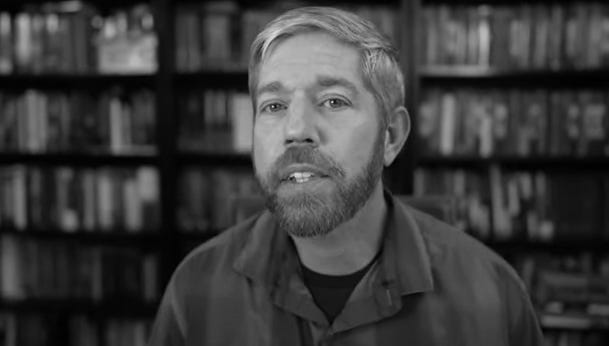
GotQuestions.org, founded by S. Michael Houdmann, is one of the most well-known Protestant apologist websites in the world. When people get on the internet with a question about Christianity, this website is usually one of the first ones a search engine will mention.
From its’ About page:
“GotQuestions.org was launched in February of 2002. The past 20+ years are an amazing account of God exploding and amplifying GotQuestions.org into one of the most frequently visited Christian websites in the world. We are currently averaging 22,000,000 pageviews per month and have received over 2,500,000,000 pageviews in our history.
[Our mission is] to glorify God and reach people for Christ by providing biblical answers to spiritually related questions. We are Christian, evangelical, theologically conservative, and nondenominational. As a parachurch ministry, our purpose is to come alongside the Church, joining in the Great Commission Jesus entrusted to His followers, by offering support and answers to those seeking clarity on spiritually related questions.
Whether you are seeking guidance, looking for answers, or are curious about spiritual matters, we are here to serve you, support you, and share the profound truths of God’s Word with you. Got questions? The Bible has answers. We’ll help you find them!”
In their article about the Protestant doctrine of Sola Scriptura, GotQuestions defines the term as follows:
“Sola scriptura means that Scripture alone is authoritative for the faith and practice of the Christian...
Sola scriptura is not as much of an argument against tradition as it is an argument against unbiblical, extra-biblical and/or anti-biblical doctrines…
The Word of God is the ultimate and only infallible authority for the Christian faith. Traditions are valid only when they conform with Scripture. Traditions that contradict the Bible are not of God and are not a valid aspect of the Christian faith. Sola scriptura is the only way to avoid subjectivity and keep personal opinion from taking priority over the teachings of the Bible. The essence of sola scriptura is basing one’s spiritual life on the Bible alone and rejecting any tradition or teaching that is not in full agreement with the Bible.”
Protestant discourses on Sola Scriptura will eventually arrive at attempts to prove that Sola Scriptura is true, and GotQuestions presents us with several Bible verses:
1. “All Scripture is God-breathed and is useful for teaching, rebuking, correcting and training in righteousness” (2 Timothy, 3:16).
If everything in the Bible is true, then here’s what we can learn about the Bible from 2 Timothy, 3: 16
-All Scripture is God-breathed
-All Scripture is useful for teaching
-All Scripture is useful for rebuking
-All Scripture is useful for correcting
-All Scripture is useful for training in righteousness
Here’s what we cannot learn about the Bible from 2 Timothy, 3: 16
-Whether or not we can use anything that isn’t part of the Scriptures
-Whether or not the Bible is the only infallible authority
The Protestant who attempts to utilize 2 Timothy, 3: 16 as a proof of Sola Scriptura either isn’t reading it carefully enough, or isn’t being honest about what it actually says.
2. Next, we have Acts, 17: 11. “The principle [of Sola Scriptura] is strongly indicated by verses such as Acts 17:11, which commends the Bereans for testing doctrine—taught by an apostle, no less—to the written Word.”
Chapter 17 of Acts Of The Apostles describes the time spent by the Apostles Paul and Silas, first in Thessalonica and then Berea. Paul had gone into the synagogue at Thessalonica, using proofs from Scripture to explain “that the Christ had to suffer and rise again from the dead, saying ‘this Jesus I preach to you is the Christ.”, an incident that ends with an angry mob of Jews chasing after Paul and Silas. (Acts, 17: 1-9) Acts, 17: 11 reads: “[The Jews in Berea] were more fair-minded than those in Thessalonica, in that they received the word with all readiness, and searched the Scriptures daily to find out whether these things were so.”
This argument contains the same problem as the argument from 2 Timothy, 3: 16, in that it doesn’t actually do what it claims to do: prove Scripture Alone. The Jews of Berea were right to search the Scriptures, because there are many good evidences in Scripture that Jesus Of Nazareth was and is the long-awaited Messiah and King Of The Jews, but this is not the same as saying Christians can’t use anything outside of the Scriptures.
3. Then GotQuestions brings up a third verse:
“Sola scriptura is all-but-explicitly indicated in 1 Corinthians 4:6, where Paul warns not to ‘go beyond what is written.’”
Chapter 4 of 1 Corinthians sees the Apostle Paul talking about the topic of judgment, the judgment of both God and man:
“With me, it is a very small thing that I should be judged by you, or by a human court. In fact, I do not even judge myself. For I know of nothing against myself, yet I am not justified by this, but He who judges me is the Lord. Therefore, judge nothing before the time, until the Lord comes, who will bring both to light the hidden things of darkness and reveal the counsels of the hearts. Then each one’s praise will come from God.
Now these things brethren, I have figuratively transferred to myself and Apollos for your sakes, that you may learn in us not to think beyond what is written, that none of you may be puffed up on behalf of one against the other.” (1 Corinthians, 4: 3-6)
Saint John Chrysostom, Archbishop Of Constantinople, author of one of the Orthodox Church’s Divine Liturgies, and prolific commentator on Scripture (the Apostle Paul was once seen whispering into his ear, resulting in that ear being incorrupt 1,600 years later) commented on this verse in his 12th Homily On 1 Corinthians:
“What is the meaning of, not to be wise above what is written? It is written, Matthew 7:3 ‘Why do you behold the mote that is in your brother’s eye, but considerest not the beam that is in your own eye? and Judge not, that you be not judged. For if we are one and are mutually bound together, it behooves us not to rise up against one another. For he that humbles himself shall be exalted’, says he. And Matthew 20:26-27; Mark 10:43; not verbatim ‘He that will be first of all, let him be the servant of all.’ These are the things which are written.”
What the Apostle Paul is instructing the Church Of Corinth to refrain from doing is disobeying Scripture, in this case on the topic of judgment, something the Pro-Sola Scriptura and Anti-Sola Scriptura camps both completely affirm. Yet, just like the verse from 2 Timothy and the verse from Acts, this isn’t the same as saying to use nothing but the Scriptures.
If Paul had meant to say use nothing but the Scriptures, he would have blatantly contradicted himself, for in his Second Epistle to the Thessalonians, he wrote: “stand firm and hold on to the traditions which you were taught, whether by word of mouth or by letter from us” (2 Thessalonians, 2: 15), an affirmation that Christian doctrine can come to us from extrascriptural oral sources. Furthermore, Patrick Madrid from the Catholic Answers website claims that none of the major Reformers attempted to use 1 Corinthians, 4: 6 as a proof of Sola Scriptura. If he’s correct about that, this is very strange behaviour for men whose commitment to the idea was absolute and unwavering. Madrid also mentions that some Biblical commentators have stated that we are not to “go beyond what is written” in God’s Book Of Life, which does connect well to the theme of judgment, but given that Saint John Chrysostom doesn’t affirm this interpretation, I would hesitate to endorse it without doing more research first.
4. For the final argument: “Jesus Himself criticized those who allowed traditions to override the explicit commands of God in Mark, 7: 6-9.”
These verses read: “[Jesus] answered and said to them, ‘Well did Isaiah prophesy of you hypocrites, as it is written: This people honors Me with their lips, But their heart is far from Me. And in vain they worship Me, teaching as doctrines the commandments of men. For laying aside the commandment of God, you hold the tradition of men - the washing of pitchers and cups, and many other such things you do.’ He said to them, ‘All too well you reject the commandment of God, that you may keep your tradition.’”
“The issue here is not the observation of Jewish customs or traditions, which Jesus certainly does not prohibit”, the Orthodox Study Bible comments. “At issue is setting human tradition contrary to the tradition of God. The Tradition Of The Elders is a body of interpretations of the Law…according to this tradition, offerings called ‘Corban’ could be promised to God in such a way that property or earnings could still be used for oneself, but not for anybody else, including one’s parents. Secondary traditions such as this obscure the primary tradition of the Law, which is contained in God’s commandments.” 1
I would agree fully with GotQuestions’ team that we cannot affirm traditions that are contrary to the Bible, albeit with a bright red disclaimer that many things that Protestants would dismiss as “contrary to the Bible”, the Orthodox would embrace as not actually contrary at all, but rather complementary.
The GotQuestions article later on states: “Whether sola scriptura is overtly mentioned in the Bible or not, we know that the Bible is the Word Of God…so, while the Bible itself may not explicitly argue for sola scriptura…” Yet earlier in the article, they’d written that Sola Scriptura is “strongly indicated” by one Bible verse and “all-but explicitly indicated” by another. The tonal shift is very awkward and doesn’t give me confidence in their understandings.
Thus ends our analysis of the offense launched by supporters of Sola Scriptura. In later Monadnock Review articles, we will be addressing some of the consequences of Sola Scriptura, as well as the two irreconcilable definitions of Sola Scriptura that exist within Protestantism, and what their purposes seem to be. May God bless, enlighten and keep you.
If you’ve enjoyed this article, please consider supporting The Monadnock Review by buying us a coffee here! ☕ A one-time donation of $4 is both less costly and less of a hassle than the long-term commitment of a $5 monthly paid subscription.
Orthodox Study Bible. (2008). Katy, Texas. Saint Athanasius Academy Of Orthodox Theology. Page 1340.